

2024-2025, Issue 1 Fall
From the Office of the Core, College of A&S, Baylor University
What world can we make?
In Story of a Poem, poet and critic Matthew Zapruder records his process writing a single poem over the course of several months. Even more fascinating, though, is the way Zapruder interweaves his own developing thoughts and feelings about his son’s autism diagnosis with the drafts of his developing poem.
One of the insights Zapruder arrives at is that—just as the poet’s task is to find the right form for a given idea/poem—so, too, is it Zapruder’s task as a parent to make new structures in the world where others like his son can thrive.
He says, “I am always in danger of sleepwalking, of asking the wrong questions. Like, what can we do to help him fit in more to the world?...Here is a better question: What world can we make where he can thrive? That’s not just a question for people who are not typical. It is the most important existential question for our species. What world can we imagine, and then make, where we all can live? Perhaps I sound like an anachronistic surrealist, but I really do believe, as deeply as I believe anything, that until we can recover our imaginations, we will continue to commit unimaginably cruel acts upon each other, and destroy everything around us” (182).
This is our work, too—the individual work we are doing in our classrooms, where we are learning new ways of including all kinds of students in the curriculum, and where we are of course helping students remember that our content is always in service to human life and flourishing. It is the work we are doing collectively as shareholders of the Core, too. How can we recognize the value that each of our disciplines brings to students? How can we protect disciplines when they are vulnerable? How can we honor the different needs of different specialties without reducing everything to a form that erases what’s unique and meaningful and good?
Structure can enhance beauty, but it should never limit or override it. I’m excited about bringing into focus, together, the big picture of the work we are doing. I hope that in the coming months we can share more and imagine more together.
If you have any thoughts about your Core class or other ideas about the Core you’d like to discuss, please email me! Ginger_Hanchey@baylor.edu, Director of the Core.
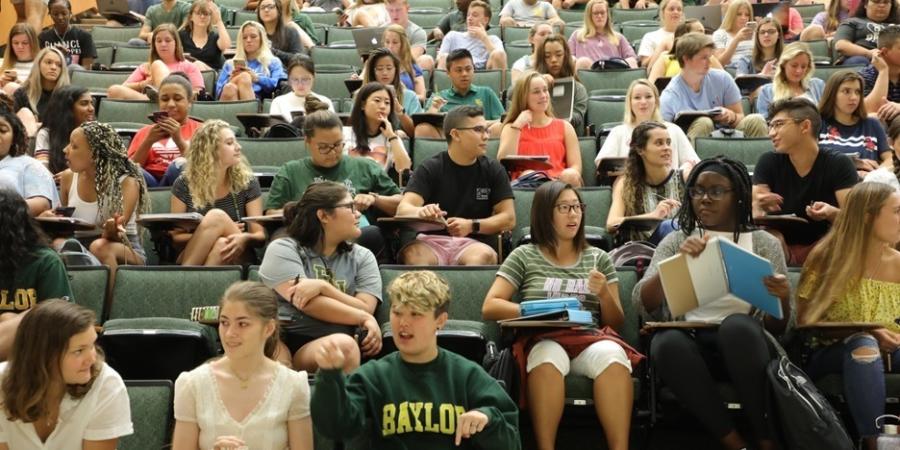
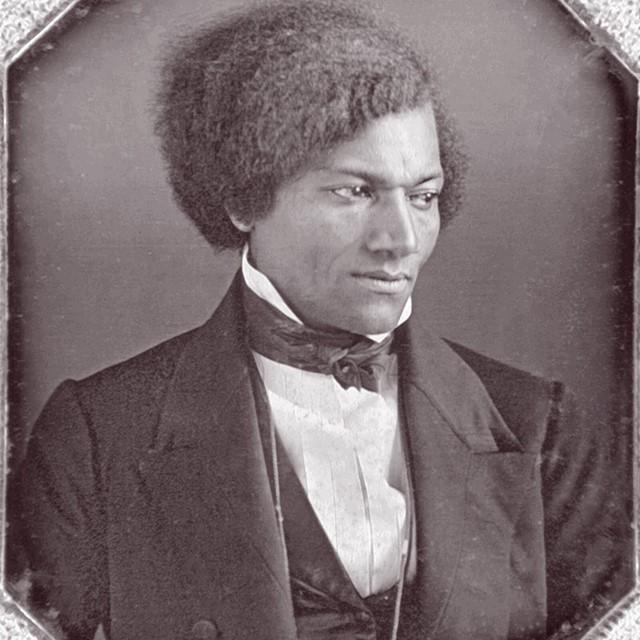
This May, five faculty representing the five common Core courses met for a week of interdisciplinary brainstorming. We listened to each other describe the main goals and themes of our classes, and then we attempted to articulate how the five classes build to something greater than the sum of their parts. We chose Frederick Douglass’ Narrative of the Life of Frederick Douglass as a common text to help us compare the approaches and aims of our five different classes. We asked, what would happen if we taught a single cohort of students who read the same text and traveled through each of our classes? What kinds of learning would happen for them? The results were inspiring!
Here is a brief look at some of the guiding questions and activities for each common Core class:
REL 1310 “The Christian Scriptures”
One guiding question:
How are the acts of writing and reading shaped by culture?
Lesson plan over time:
Consider how abolitionists and anti-abolitionists both used the Bible to affirm their own views
REL 1350 “Christian Heritage”
One guiding question:
Is justice important to God?
Lesson plan over time:
Read texts about slavery and race from various time periods by writers identifying as Christian; consider the different ways American Christians have understood the concept of justice
HIS 1300 “The U.S. in Global Perspective”
One guiding question:
How does our race and ethnicity affect our experience in the U.S.?
Lesson plan over time:
Consider Douglass’ migrations in the larger context of other American migration narratives; consider the effect of slavery and migration on the American family
PSC 1387 "The US Constitution, Its Interpretation, and the American Political Experience"
One guiding question:
Can freedom be an endowment, or is it earned/protected?
Lesson plan over time:
Consider the ways Douglass challenges aspects of the Declaration of Independence
ENG 2310 “American Literary Cultures”
One guiding question:
How do literary texts preserve and win freedoms?
Lesson plan over time:
Read parts of three American memoirs, consider how style or artistic choice communicates a person’s understanding of their own freedom
Many thanks to Dr. Joe Coker (REL 1310), Dr. David Whitford (REL 1350), Dr. Dan Watkins (HIS 1300), and Dr. Steve Block (PSC 1387), who collaborated with me (ENG 2310) on this project. There are no plans to require a single reading in our Core classes, but the conversation provided a better sense of the cohesive learning experience our Baylor students receive from the five common Core classes.
Our five common Core classes help students understand how culture influences thinking and behavior. Students also learn how to read different kinds of texts and sources (legal, historical, artistic, religious) within their cultural contexts.
Spotlight on…
Foreign Languages and Cultures Distribution List

Matthew Zapruder studied Russian in Moscow after graduating from college and only later went on to write poetry. He often says what most language experts say—that learning a language is not just about learning to communicate from one language to another, but more significantly, is a way of enlarging the mind; new grammars, new metaphors and cultural constructs all create new pathways for thinking about a given issue, topic, or problem. Language-learning helps us reach ideas we might otherwise never encounter.
Here is snapshot from the Foreign Languages and Cultures Distribution List. Available classes:
- Modern Foreign Languages* 1301 (* includes: ARB, CHI, FRE, GER, ITA, JPN, KOR, POR, RUS, SPA, SWA)
- Modern Foreign Languages* 1302 (* includes: ARB, CHI, FRE, GER, ITA, JPN, KOR, POR, RUS, SPA, SWA)
- Modern Foreign Languages* 1412 (* includes: GER, SPA)
- Modern Foreign Languages* 2412 (* includes: GER, SPA)
- Modern Foreign Languages* 2310 (* includes: ARB, CHI, FRE, GER, ITA, JPN, KOR, POR, RUS, SPA, SWA)
- Classical Languages* 1301 (* includes: GRK, HEB, LAT)
- Classical Languages* 1302 (* includes: GRK, HEB, LAT)
- Classical Languages* 2310 (* includes: GRK, HEB, LAT)
All students must demonstrate proficiency through the 2310 level in a modern or classical language or through the 1302 level in two Classical Languages (Greek, Latin, Hebrew) or complete GER, SPA 1412 & 2412. For those who already have credit for 2310 (pre-Baylor) or place into a higher level, other language and culture options are available (ex: JPN 3306 Japanese Cinema). To view the Distribution List in its entirety, visit the Core website here.
Spotlight on…
Scientific Reasoning II: Grand Challenges in Science Distribution List

The Grand Challenges in Science course will introduce students to a major global challenge in science from a multi-disciplinary approach. The “Grand Challenges” addressed in these courses should be topics that are compelling for both intellectual and practical reasons, that deal with roadblocks for progress in a field, and that will deliver significant payoff when progress is made. Using primary sources, discussion, and critical reasoning, students will examine the history and evidence of a particular challenge and examine solutions to the problem.
Classes available:
- ANT 1307, The Evolution of Human Societies: An Interdisciplinary Perspective
- BIO 1303, Human Ecology: Our Place in Nature
- GEO 1306, The Earth Through Time
- GEO 1307, Evolution and Extinction
- GEO 1308, Climate Change
- GEO 1309, Origins of Habitable Worlds
- GEO 1310, Water Today and Tomorrow
- PHY 3305, History of Invention and Technology
- PSY 1305, Psychological Science: Understanding Human Behavior
- STA/CSI 2300, Introduction to Data Science
-OR-
One additional course from Scientific Method I: Course with Laboratory Experience Distribution List
To view the Distribution List in its entirety, visit the Core website here.
Adding Courses to the Core
To add courses from your department to the Core or to make changes to current Core classes, see helpful links here. All curriculum requests are reviewed by the Core Curriculum Advisory Committee (CCAC).
CCAC 2024-2025:
- Chair, non-voting—Paul Martens (Dean’s Office)
- Critical Thinking—Anne-Marie Schultz (PHI); term expires August 2026
- Civic Engagement— Rebecca Flavin; term expires August 2027
- Christian Tradition—Derek Dodson (REL); term expires August 2025
- Creative Thinking—Lauren M. Weber (THEA); term expires August 2025
- Scientific Thinking—Karenna Malavanti; term expires August 2027
- At-large—Jaquelyn Duke (BIO); term expires August 2025
- At-large—Bob Elder (HIS); term expires August 2026
- ex officio—Patrick Broaddus (Dean's Office)
- ex officio—Ginger Hanchey (Dean’s Office)